

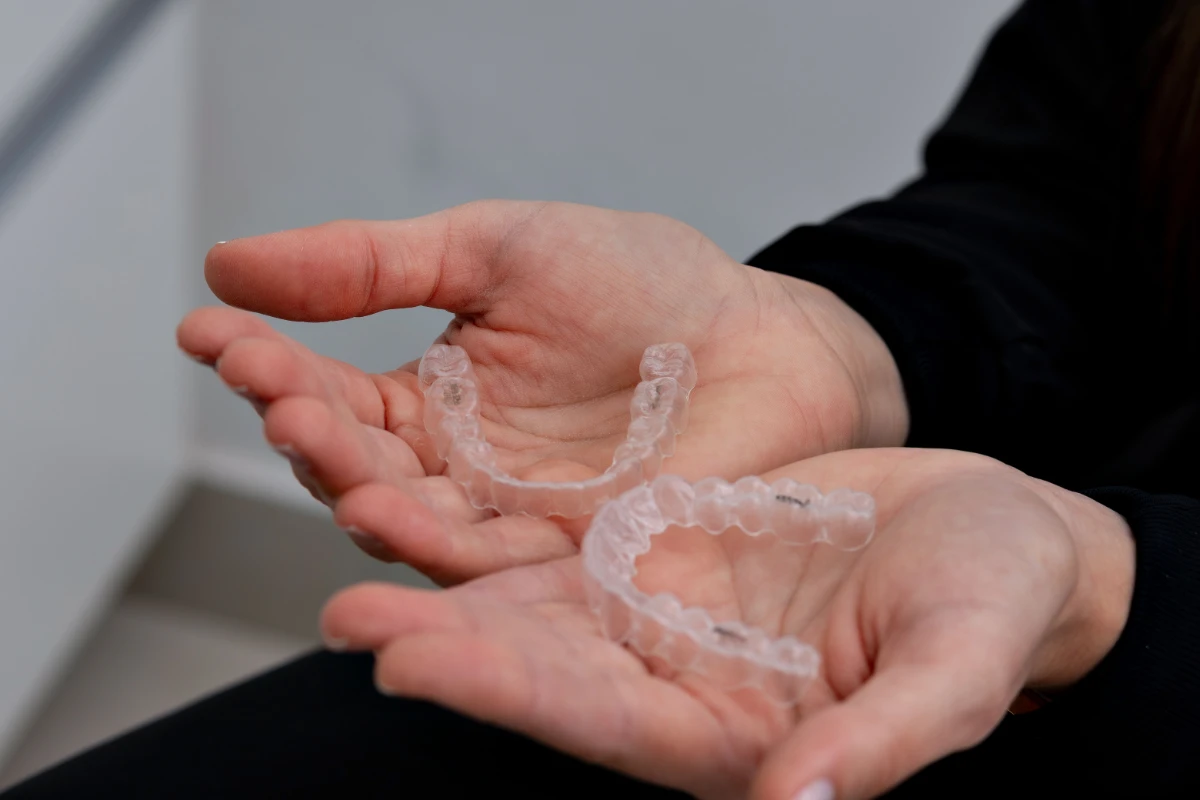
Either treatment can give you great results. Your final choice depends mostly on the overall complexity of your case and how subtle you want your appliances to look day to day. Invisalign in New Westminster: Aligner treatment works with a series of removable, custom-fitted trays that gradually move your teeth, whereas traditional braces use bonded brackets and wires that remain on your teeth throughout the process.
Clear aligners let you handle light alignment work quietly in the background during your daily conversations. For severe tooth rotations or deep-bite issues, traditional braces still provide the extra control needed to do the heavy lifting. Don’t look for a single best option. The right choice is simply whatever fixes your smile without getting in the way of your life.
What Causes Crooked Teeth and Bite Problems?
Misalignment usually stems from a mix of causes. While your family history sets the initial blueprint, various developmental milestones and daily habits play a major role in how your smile develops.
Common contributors include:
- Inherited mismatches between jaw size and tooth size
- Prolonged thumb sucking or pacifier use in early childhood
- Early loss of baby teeth, which allows neighbouring teeth to drift
- Mouth breathing or tongue thrusting during development
- Injury to the jaw or front teeth
- Shifting later in life after wisdom teeth erupt or after you lose a tooth
Crowding often becomes noticeable in your late twenties and thirties, which is one reason adult orthodontics has grown steadily over the past decade.
Can You Prevent Misalignment?
You can’t change genetics, though early monitoring and a few habits can reduce how severe the problem becomes.
Helpful preventive steps include:
- Schedule a quick orthodontic checkup around age seven while your child’s jaw is still actively growing.
- Help your child break thumb-sucking and pacifier habits before they turn three.
- Take care of chronic mouth-breathing or airway issues right away rather than waiting.
- Replacing missing teeth promptly to stop neighbouring teeth from tipping
- Wearing a retainer exactly as directed after any teeth straightening treatment
Retainer use matters more than most people expect. The fibres around each tooth root pull it back toward its original position for months after your braces or trays come off, which is why relapse is a common reason patients return for a second round.
Invisalign vs Braces: Comparing Your Options
Both Invisalign and traditional braces move teeth into better positions by applying gentle, steady pressure over time. However, they work in different ways. Invisalign uses clear, removable aligners, while braces use brackets and wires attached to the teeth. Choosing between them depends on your dental needs, lifestyle, and ability to follow the treatment plan.
A dentist in New Westminster can examine your teeth, check your bite, and assess how much movement is needed before recommending an option. An examination and X-rays may help determine which type of orthodontic treatment is suitable.
Visiting a dental clinic near you can help you understand the available treatment options, their benefits, and what to expect during the process.
How Clear Aligners Work
After a 3D scan of your mouth, you get a series of custom clear trays and swap to a new set every week or two. You pop them out whenever you eat or brush, but they need to stay in your mouth for 20 to 22 hours a day to keep your teeth moving on schedule. Because they’re nearly transparent, many patients call them invisible braces.
How Traditional Braces Work
With traditional braces, small brackets stay glued to your teeth, and a metal wire is tightened every month or two to keep your smile on track. You never have to worry about forgetting to wear them since they stay on 24/7. Because the hardware stays on full-time, it remains our most reliable approach for correcting severe bite issues, turning rotated teeth, and closing large spaces.
Key Differences at a Glance
Clear aligners tend to offer:
- Barely noticeable when you speak
- The freedom to remove trays whenever you eat
- Normal brushing and flossing, with no special tools
- A typical span of six to eighteen months
- The strongest fit for mild to moderate cases
Traditional braces tend to offer:
- A fixed appliance that works without any effort to remember
- Reliable results on severe rotations and complex bite corrections
- Steady progress that doesn’t depend on daily discipline
- A typical span of eighteen to thirty-six months
- The better option for significant jaw discrepancies
Each system asks something different of you. Aligners depend on wearing the trays 20 to 22 hours a day, so results suffer if they sit in a pocket. Braces come with visible brackets, a diet that avoids hard or sticky foods, and a few extra minutes of cleaning each day with floss threaders.
Take the Next Step Toward a Straighter Smile
A proper assessment is the only way to know which approach suits your teeth, your bite, and your schedule. Please book a consultation with Belmont Dental Centre, and our team will review both options with you and put together a clear, personalized plan.
FAQs
Is Invisalign as effective as braces?
For everyday smiles, yes. Aligners easily match the effectiveness of traditional braces for simple bite tweaks, small spaces, and mild crowding. Braces are really only necessary when things get tricky, like guiding a down-erupted tooth, twisting a stubborn premolar, or doing a full overhaul of your bite.
How long does orthodontic treatment take?
Most aligner cases finish between six and eighteen months. Treatment with braces usually takes between 18 and 36 months. Your personal timeline will vary based on the complexity of your bite and your age at the time of treatment.
Do clear aligners cost more than braces?
Prices are much closer today than they used to be. How much you pay depends mostly on how far your teeth need to shift, how many months your treatment takes, and the total number of trays or wire adjustments involved.
Can teenagers use clear aligners?
Yes, provided they wear the trays consistently. Many teen aligner systems include built-in wear indicators, so your dentist can track progress accurately.